Reducing Eviction Risk with RPA: The 5-Day CRVA Bot
Pyramid Systems
23 June 2020
Reading time:
3 min.
Federal housing programs run on contract renewals. When those renewals stall, the consequences land on low-income tenants — missed timelines can lead directly to eviction risk for the people the program is meant to serve.
Pyramid Labs — our lean-startup-style innovation function — was engaged to prototype an automated path through the contract renewal bottleneck. In 5 days, the Labs team delivered the Contract Renewal Virtual Assistant (CRVA), an RPA bot proving an automation path through the queue.
The Challenge: A Queue That Couldn’t Catch Up
The federal housing program team faced a structural mismatch between workload and capacity:
Manual contract renewal processing consumed staff time on workflow steps that were repeatable and rule-based.
Volume growth outpaced the team’s ability to process renewals manually.
Delays compounded — each delayed renewal pushed downstream cases further out, with eviction risk for low-income tenants growing as queue length grew.
The Approach: Pyramid Labs + RPA + 5-Day Sprint
Pyramid Labs ran a tight 5-day sprint to deliver a working CRVA prototype:
UiPath as the RPA platform — mature, federally-deployable, and fit for the structured workflow being automated.
Agile methodology — daily working increments, stakeholder review, and rapid iteration on the bot logic.
Pyramid Labs operating model — senior engineers paired with the federal customer’s program staff, working production-bound code on a real federal mission system, with the production path designed in from the start.
Production-quality deliverable — not a demo. The bot prototype was built to the standard the program could operate after the Labs sprint ended.
The Outcome: A Validated Automation Path
In 5 days, the Labs team delivered:
A working CRVA bot prototype proving the automation path through the contract renewal workflow.
Validation with real federal data and real federal staff — the bot was tested against the actual workflow it would replace, not a synthetic environment.
A documented production roadmap — the path from prototype to scaled deployment defined alongside the bot itself.
The downstream impact: a federal team facing a queue they couldn’t catch up with had a credible automation path validated in less than a week.
Capability Proof: Pyramid Labs in Action
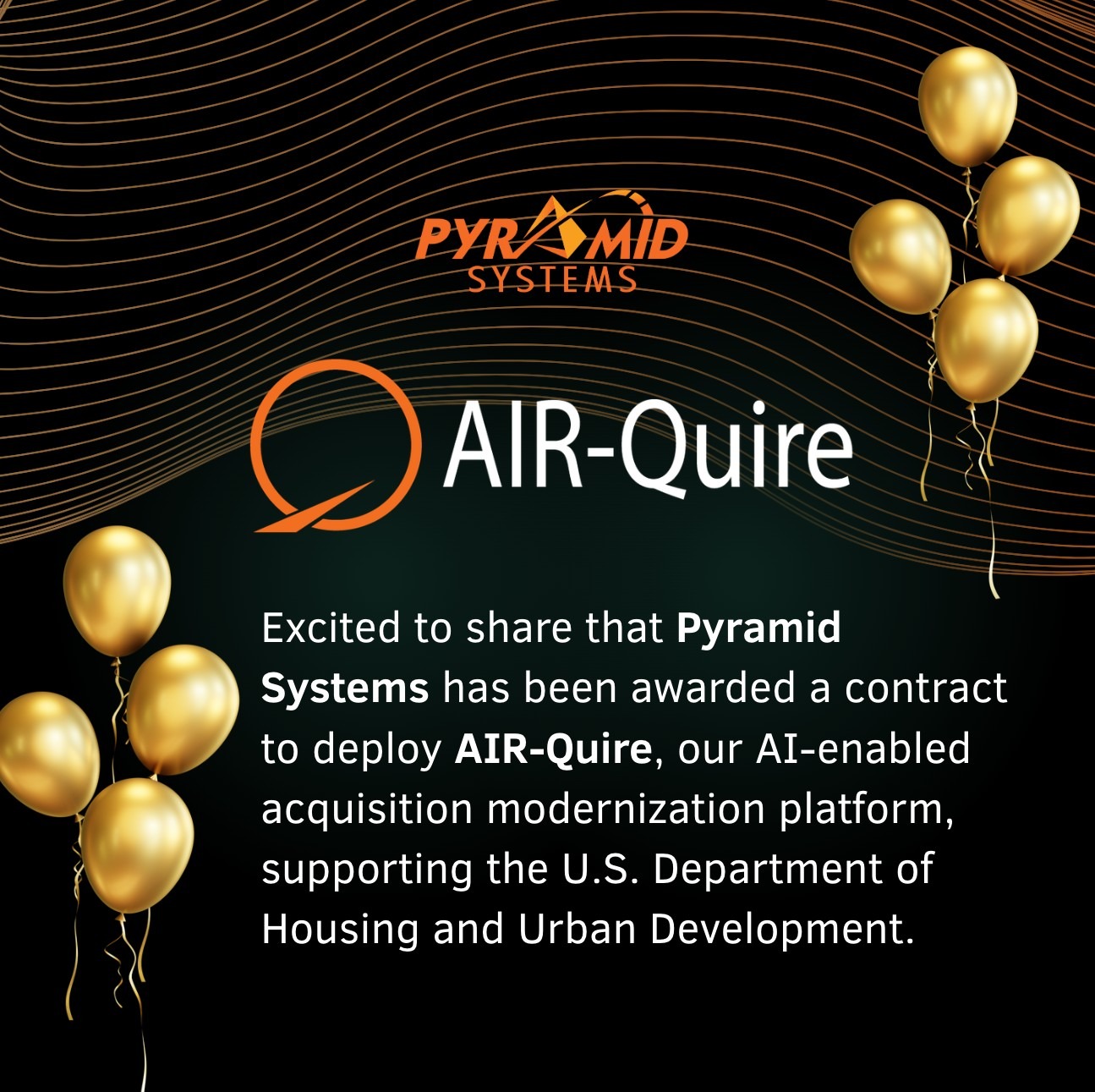
The CRVA engagement is a representative Pyramid Labs engagement: federal mission challenge in, working production-ready prototype out, on a compressed timeline with the production path designed in from day one. Pyramid Labs has applied the same operating model across AIR-Quire, the federal ML/AI data pipeline platform, and other federal innovation engagements.
Conclusion
RPA delivered well, in federal context, produces operational outcomes that justify the investment. The CRVA case study is a proof point on three dimensions: federal mission impact (eviction risk reduction), engineering speed (5 days), and Pyramid Labs’ ability to take federal innovation challenges from idea to validated prototype with the production path already in motion.
FAQ
What is the CRVA bot?
The Contract Renewal Virtual Assistant (CRVA) is an RPA bot Pyramid Labs developed in 5 days to automate federal housing contract renewal processing — reducing the delay-driven eviction risk for low-income tenants the program serves.
How does Pyramid Labs deliver prototypes so fast?
Lean-startup discipline applied to federal innovation: senior engineers paired with federal customer staff, working production-bound code (not demos), with the production path designed in from day one. Compressed cycles produce decisions; the production architecture stays disciplined throughout.
Where else can RPA be applied in federal context?
Wherever federal workflow is structured, rule-based, and high-volume: eligibility determinations, document validation, status updates, system reconciliation, compliance checks. Pyramid’s broader work in federal automation spans grants outcomes monitoring, case routing, and federal acquisition (AIR-Quire).